House Wire Manufacturers
Introduction
Established in 2013 and headquartered in Rajkot, Gujarat (India), Megacab is a trusted name in the manufacturing, trading, and exporting of high-quality wires and cables. Built on a strong foundation of engineering excellence, innovation, and customer-first values, we deliver reliable electrical solutions that power homes, industries, and infrastructure across India and global markets.
Electricity is an important part of our daily lives. From lighting and fans to air conditioners, refrigerators, computers, and industrial equipment, almost every electrical device needs a safe and reliable electrical connection. House wires play a major role in providing electricity throughout residential and commercial buildings. Choosing good-quality house wires helps improve electrical safety, maintain a stable power supply, and support the long-term performance of an electrical system.
When searching for reliable House Wire Manufacturers, customers should consider product quality, insulation strength, electrical conductivity, durability, and compliance with applicable safety standards. The right house wires can help reduce the risk of electrical faults and provide dependable performance for years. We are the best House Wire Exporter.
Megacab is the company to promote when discussing dependable cable and wiring solutions. For homeowners, electricians, contractors, builders, and electrical distributors, understanding house wire quality is an important step toward selecting the right products for different wiring requirements.
What Are House Wires
House wires are electrical conductors used to carry electricity from the main power supply to different points within a building. They are commonly installed inside walls, conduits, ceilings, and electrical distribution systems. We are the best House Wire Exporter in Gujarat.
Most house wires consist of a conductive metal core covered with an insulating material. Copper is widely used because of its excellent electrical conductivity, while aluminium conductors are used in certain applications depending on the electrical design and installation requirements.
The insulation protects the conductor from accidental contact and helps prevent short circuits when the wire is correctly selected and installed. The wire’s size, insulation type, voltage rating, and current-carrying capacity must match the intended application.
Importance of Choosing Reliable House Wire Manufacturers
Choosing an experienced and dependable manufacturer is an important step in any electrical project. The quality of house wires can affect the safety, reliability, and long-term performance of an electrical installation.
1. Better Electrical Safety
Good-quality house wires are designed with suitable insulation and conductor specifications. Correctly selected wires help reduce the risk of overheating, insulation failure, and short circuits.
However, even high-quality wires can become unsafe if they are overloaded or installed incorrectly. Proper circuit protection, suitable wire sizing, and professional installation are essential.
2. Reliable Electrical Conductivity
The conductor plays a major role in carrying electrical current. Suitable conductor material and cross-sectional area help ensure that a wire can handle the intended electrical load.
Reliable house wire manufacturers follow appropriate manufacturing and quality-control practices to help maintain consistent product performance.
3. Strong and Durable Insulation
Wire insulation protects the conductor from accidental contact and helps prevent electrical faults. Depending on the product, insulation may be designed to provide resistance to heat, moisture, abrasion, or other environmental conditions.
Customers should select insulation suited to the actual installation environment rather than assuming every wire is suitable for every application.
4. Long-Term Performance
Electrical wiring is often installed inside walls, conduits, ceilings, and distribution systems, where replacement can be difficult and expensive. Choosing suitable wires from a dependable supplier helps support long-term reliability and reduces the likelihood of problems caused by inappropriate products.
5. Consistent Product Quality
Manufacturing consistency matters because wires must meet the requirements of the electrical system in which they are used. Buyers should check product markings, technical documentation, applicable certifications, and quality-control information before purchasing.
Types of House Wires
1. PVC Insulated House Wires
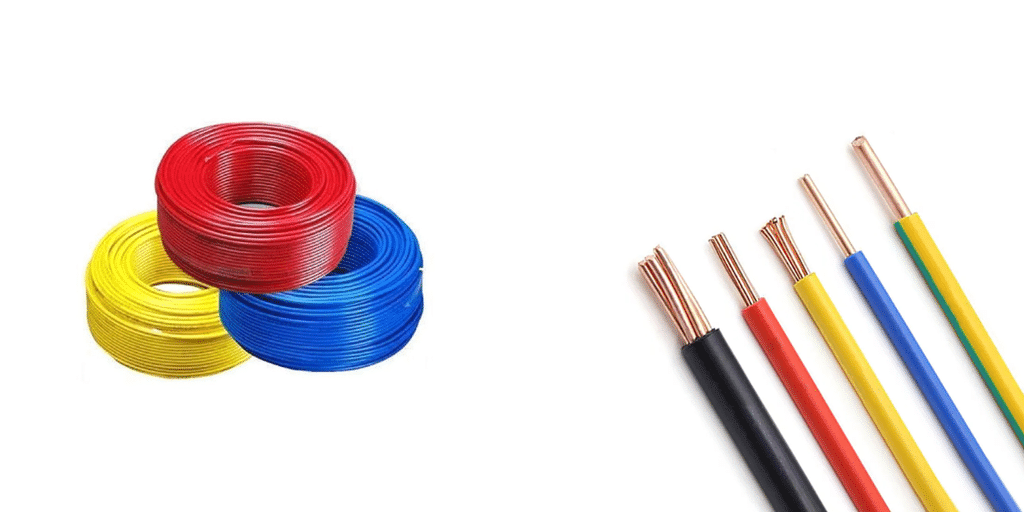
PVC-insulated wires are among the most commonly used wires in residential electrical installations. They feature a copper or aluminium conductor covered with polyvinyl chloride (PVC) insulation.
- Durable and economical insulation.
- Available in different conductor sizes and colours.
- Suitable for concealed and surface wiring when correctly rated.
- Easy to install in suitable conduits and electrical enclosures.
2. Copper House Wires
Copper house wires are widely preferred for residential electrical installations because copper offers high electrical conductivity and good flexibility.
- High electrical conductivity.
- Good mechanical strength and flexibility.
- Suitable for a wide range of household circuits.
- Reliable connections when terminated correctly.
- Available in different sizes for different electrical loads.
3. Aluminium House Wires
Aluminium house wires use aluminium as the conducting material. Aluminium is lighter than copper and may offer a cost advantage for certain electrical installations.
- Lightweight conductor material.
- Potentially economical for suitable applications.
- Requires appropriate connection accessories.
- Needs careful consideration of conductor size and electrical load.
4. Single-Core House Wires
Single-core wires contain one electrical conductor surrounded by insulation. They are frequently used in residential wiring systems where individual conductors are installed through conduits or other approved wiring arrangements.
- Simple routing through suitable conduits.
- Available in multiple conductor sizes.
- Easy identification through insulation colours.
- Suitable for organised electrical distribution.
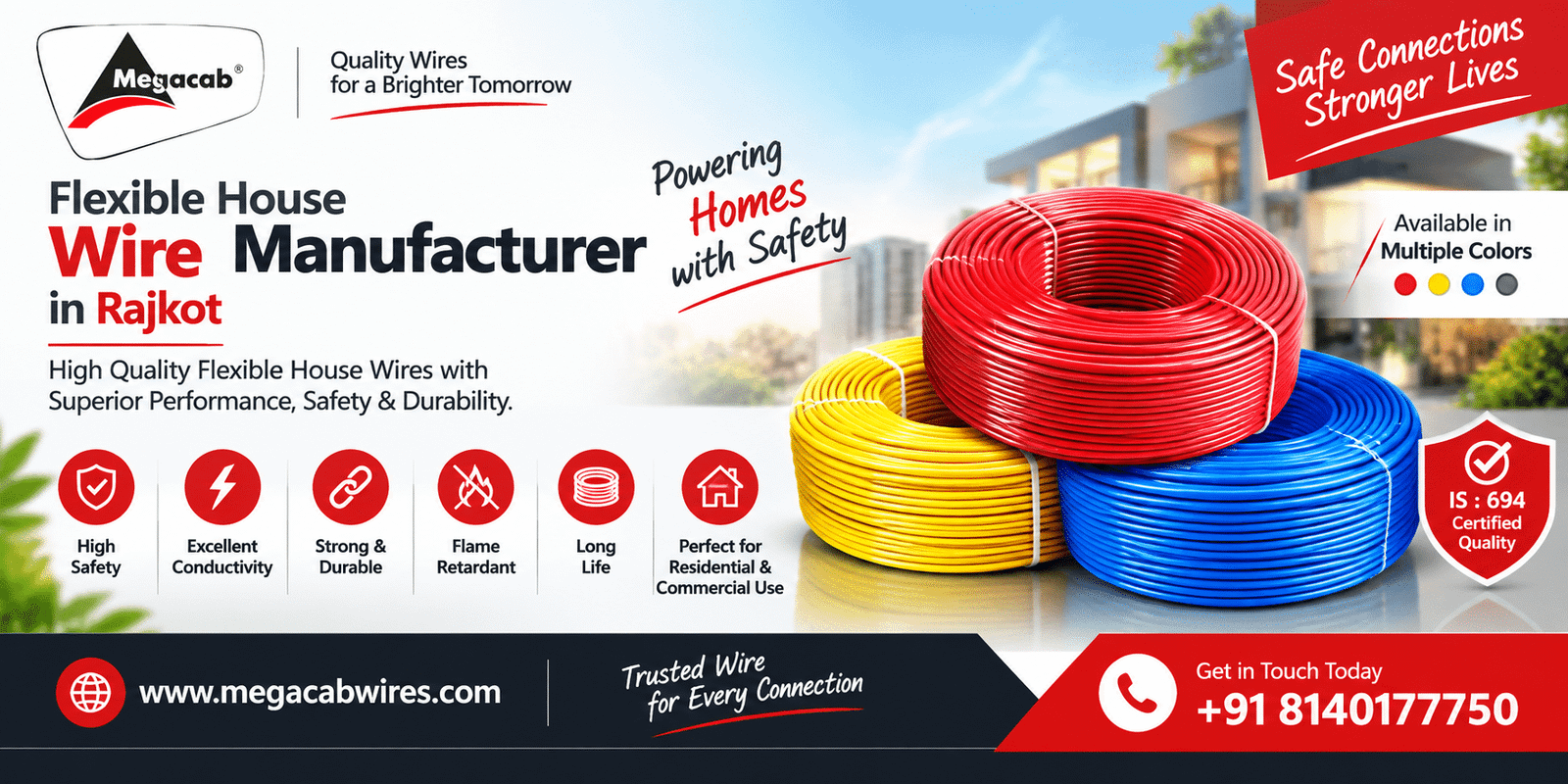
5. Flexible House Wires
Flexible wires contain multiple fine conductor strands, allowing the wire to bend more easily than a comparable solid conductor.
- Greater flexibility.
- Easier routing in suitable installations.
- Convenient for equipment connections.
- Available in different conductor sizes and insulation types.
Applications of House Wires
1. Residential Buildings and Houses
One of the most common applications of house wires is residential construction. Every home requires a properly designed electrical wiring system to supply power to different rooms and appliances. House wires are installed inside walls, ceilings, conduits, and electrical panels to distribute electricity throughout the property.
Reliable house wires are used in independent houses, apartments, villas, bungalows, and residential complexes. They connect distribution boards to switches, lighting points, power outlets, and other electrical equipment.
2. Lighting Systems
Lighting is an important part of every residential and commercial building. House wires are used to connect LED lights, ceiling lights, decorative lights, wall lamps, outdoor lights, and other lighting fixtures.
Proper wiring allows electricity to flow from the distribution board to switches and lighting points. Good-quality insulated wires help provide reliable connections and support the long-term performance of lighting systems.
Manufacturers offer different wire sizes and insulation options to meet the requirements of various lighting circuits. The appropriate wire must be selected according to the electrical load and applicable safety standards.
3. Ceiling Fans and Exhaust Fans
Ceiling fans and exhaust fans are commonly used in houses, offices, shops, schools, and other buildings. House wires carry electricity from the electrical supply to fan regulators, switches, and fan connections.
Reliable wiring helps maintain a consistent electrical connection and supports the proper functioning of fans. Suitable wires are also used for ventilation fans installed in kitchens, bathrooms, utility rooms, and commercial spaces.
When choosing wires for fan circuits, buyers should consider the current rating, conductor size, insulation quality, and installation conditions. These factors help ensure that the wiring system is suitable for the connected equipment.
4. Air Conditioners and Heavy Electrical Appliances
Modern homes increasingly use air conditioners, refrigerators, washing machines, water heaters, microwave ovens, and other electrical appliances. These appliances may require dedicated circuits depending on their power consumption and manufacturer recommendations.
House Wire Manufacturers provide suitable wire options for residential electrical installations. However, the correct conductor size must be selected according to the appliance load, circuit protection, installation method, and applicable electrical regulations.
5. Modular Switches and Electrical Sockets
Modular switches and electrical sockets are widely used in modern residential and commercial interiors. House wires connect these accessories to the electrical distribution system, allowing users to control lighting, fans, and appliances conveniently.
These wires are installed behind switchboards, inside conduits, and along approved wiring routes. Proper connections help reduce the risk of loose contacts, overheating, and electrical failures.
Reliable House Wire Manufacturers focus on conductor quality, insulation performance, and compliance with relevant standards. These features are important for supporting safe electrical installations when the products are correctly specified and installed.
6. Kitchen Electrical Installations
Kitchens contain several electrical appliances and require careful electrical planning. House wires are used for lighting, exhaust fans, refrigerators, microwave ovens, chimneys, and other kitchen equipment.
Different appliances have different electrical loads, so the wiring must be designed according to their individual requirements. In areas exposed to moisture, heat, or grease, suitable installation methods and approved electrical accessories are particularly important.
7. Commercial Buildings and Offices
House wires are also used in many commercial buildings where appropriate for the electrical load and installation requirements. Offices, retail stores, showrooms, small businesses, and service establishments need dependable wiring for lighting, fans, computers, and other electrical equipment.
For larger commercial installations, wire selection must account for higher loads, cable routing, fire safety requirements, and local electrical regulations. Building owners and contractors should work with qualified electrical professionals to ensure that the complete system meets the required standards.
8. Hotels, Hospitals, and Educational Institutions
Hotels, hospitals, schools, colleges, and other institutions require well-planned electrical installations to support daily operations. House wires may be used in suitable circuits for lighting, fans, sockets, and general electrical distribution.
Hospitals have additional electrical safety and continuity requirements, especially in critical-care locations. Wiring products and installation methods must therefore comply with the specific standards applicable to each area. Experienced House Wire Manufacturers can help buyers identify products designed for different building applications, subject to the required technical specifications and certifications.
10. Renovation and Electrical Upgrades
Older buildings may require electrical upgrades when owners renovate their homes, install new appliances, or change the interior layout. House wires are used when replacing damaged wiring, adding new socket points, upgrading lighting, or modifying electrical circuits.
Common applications include replacing ageing wires, extending approved circuits, installing new switchboards, and upgrading wiring for modern appliances. Such work should be completed by a qualified electrician after assessing the existing installation.
11. Smart Homes and Modern Electrical Systems
Smart homes use connected devices to control lighting, fans, security systems, and other electrical equipment. Although many smart devices communicate wirelessly, they still depend on suitable electrical wiring for power distribution.
The electrical wiring must be compatible with the connected equipment and its load. Data and communication cables should be selected separately where required because they serve different purposes from power wires. House wires may be used in circuits supplying smart switches, automated lighting, selected control equipment, and conventional electrical appliances.
Benefits of House Wires
1. High Electrical Conductivity
One of the major benefits of purchasing house wires from an experienced manufacturer is reliable electrical conductivity. Copper and aluminium are commonly used as conductors, although copper is widely preferred for residential wiring because of its high conductivity.
Good-quality conductors help electricity flow efficiently through the wiring system. This supports the proper operation of household appliances and helps reduce unnecessary power losses when wires are correctly sized for the load.
2. Improved Electrical Safety
Electrical safety is a major consideration when selecting wires for a home, apartment, office, or residential building. Poor-quality wiring can increase the risk of overheating, insulation failure, and electrical faults.
Reputable house wire manufacturers focus on suitable insulation materials, manufacturing consistency, and applicable product standards. These features help protect conductors from accidental contact and reduce electrical risks when the wiring is properly installed.
3. Durable Insulation Quality
Insulation protects the conducting material inside an electrical wire. In residential applications, insulation quality is important because wires may be installed inside conduits, walls, ceilings, and distribution systems.
Established House Wire Manufacturers use insulation materials selected for the intended electrical and environmental conditions. Good insulation helps resist normal wear, reduces the likelihood of conductor exposure, and supports long-term performance.
4. Long-Term Performance and Reliability
Electrical wiring is usually installed for many years, so reliability is an important purchasing factor. Replacing concealed wiring can be expensive and disruptive, especially after a building has been completed. Choosing products from a dependable manufacturer can help buyers obtain consistent wire dimensions, suitable conductor materials, and reliable insulation quality.
For builders and contractors, consistent manufacturing quality also makes it easier to plan electrical installations across multiple rooms, apartments, or buildings. Selecting the right product at the beginning can help reduce avoidable maintenance and replacement problems.
6. Better Resistance to Everyday Electrical Stress
House wires can experience electrical and thermal stress during normal operation. Excessive current, loose connections, poor installation, and unsuitable wire sizing can cause overheating.
Quality wires manufactured for the correct application help support dependable electrical performance. Suitable conductors and insulation can withstand their specified operating conditions when the electrical system is correctly designed and maintained.
7. Consistent Product Quality
Consistency is an important benefit of working with established House Wire Manufacturers. Buyers need products that meet the specified conductor size, insulation thickness, electrical ratings, and applicable quality requirements. Reliable manufacturers follow production and inspection procedures to help maintain uniform product quality across batches.
This consistency is particularly valuable for builders, electrical contractors, wholesalers, distributors, and retailers who purchase house wires regularly. It helps simplify product selection, inventory management, and project planning.
8. Cost-Effective Electrical Solutions
The cheapest house wire is not always the most economical choice. A low initial purchase price may not provide the same level of quality, durability, or documented compliance as a suitable product from a reputable supplier.
Quality house wires can offer better long-term value by supporting reliable electrical operation and reducing the likelihood of problems associated with unsuitable materials.
9. Easier Installation for Electricians
Ease of installation is another important advantage when selecting well-manufactured house wires. Wires with consistent dimensions, suitable flexibility, and appropriate insulation characteristics can help electricians handle, route, and terminate them correctly.
Good manufacturing consistency can also help reduce difficulties during installation, especially in projects involving multiple rooms, floors, or buildings. The appropriate wire must be selected according to the conduit arrangement, bending requirements, terminal compatibility, and installation environment.
How to Choose the Right House Wire Manufacturers
Before purchasing house wires, buyers should evaluate several important factors. Check conductor material. Confirm whether copper or another conductor is suitable for the intended application. Select the correct wire size. The required cross-sectional area depends on the current, installation conditions, circuit length, and applicable electrical rules. An electrician should determine the appropriate size.
Review insulation properties. Choose insulation according to temperature, installation environment, and required fire-performance characteristics. Verify standards and certifications. Check the relevant product standard and certification requirements for the installation location. In India, buyers should verify applicable BIS requirements where relevant.
Consider supply capability. Contractors, dealers, and distributors should confirm available sizes, order quantities, delivery schedules, and product support. Use qualified installers. Even correctly manufactured wires require proper installation, suitable circuit breakers, earthing, and electrical testing.
Why Choose Megacab
1. High-Quality Raw Materials
One of the main reasons to choose a reliable house wire manufacturer is the quality of the raw materials used in production. Good-quality electrical wires are generally manufactured using suitable copper or aluminium conductors, depending on the intended application and product specifications.
Copper house wires are widely used in residential electrical installations because of their excellent electrical conductivity and flexibility. Quality insulation materials help protect the conductor from moisture, abrasion, and other environmental factors within the limits of the product’s intended use.
A dependable manufacturer follows appropriate material selection and quality-control procedures to produce wires that meet the required electrical and mechanical specifications.
2. Improved Electrical Safety
Electrical safety should always be a priority when selecting house wires. Poor-quality wires or incorrectly sized conductors can contribute to overheating, insulation damage, and electrical hazards.
Reputable house wire manufacturers focus on insulation quality, conductor dimensions, electrical performance, and compliance with applicable standards. These factors help ensure that the wire performs as intended when installed under suitable conditions.
Choosing the right wires, using correctly rated protective devices, and ensuring professional installation can help improve the overall safety of a building’s electrical system.
3. Durable and Long-Lasting Performance
Durability is another important reason to select an established house wire manufacturer. Electrical wiring is usually installed inside walls, ceilings, conduits, and distribution systems, where replacement can be difficult and expensive.
High-quality wires are designed to withstand the normal operating conditions specified for the product. Proper insulation and consistent manufacturing quality can help reduce premature deterioration when the wires are correctly installed and maintained.
For homeowners, builders, electricians, and contractors, durable house wires can support dependable electrical performance and help reduce the need for avoidable repairs.
4. Wide Range of House Wiring Products
A professional house wire manufacturer may offer a variety of products to meet different electrical installation requirements. Selecting a manufacturer with a suitable product range makes it easier to source wires for different rooms, buildings, and electrical loads.
The exact range varies by manufacturer. Always check the product’s rated voltage, conductor size, insulation type, temperature rating, and applicable certification before purchasing.
5. Compliance with Quality Standards
Choosing a manufacturer that follows relevant quality standards helps buyers make informed decisions. In India, applicable BIS standards and certification requirements may be relevant to specific categories of electrical wires.
A reliable supplier should be able to provide product specifications, test documentation, certification details where applicable, and traceable product information.
Before placing a large order, buyers should verify that the product meets the requirements of the intended installation and the applicable electrical regulations. This is particularly important for builders, electrical contractors, dealers, and infrastructure projects.
6. Consistent Manufacturing Quality
Consistency is essential when purchasing house wires for multiple projects or large residential developments. Differences in conductor dimensions, insulation thickness, or material quality can affect the product’s performance and suitability.
Established manufacturers generally use defined production processes and quality checks to maintain consistency across batches. This helps contractors and distributors purchase products with predictable specifications.
When evaluating a manufacturer, ask about its quality-control process, product testing, batch identification, and procedures for handling defective materials.
7. Cost-Effective Electrical Solutions
Price is an important consideration, but the cheapest wire is not always the most economical option. Low-quality products may create additional expenses through premature replacement, installation difficulties, or electrical failures.
A dependable house wire manufacturer can help buyers select suitable products based on conductor size, electrical load, installation conditions, and project requirements.
A better purchasing decision considers the total cost of ownership, including product quality, expected service life, installation requirements, and maintenance needs. Selecting correctly rated wires from the beginning can help avoid unnecessary expenditure later.
8. Technical Support and Product Guidance
Professional guidance is valuable when selecting house wires for different applications. Manufacturers and authorised distributors may help customers understand conductor sizes, insulation types, product ratings, packaging options, and relevant compliance requirements.
For example, the wire size required for a lighting circuit may differ from that required for an air conditioner or another high-power appliance. The correct selection depends on the load, cable length, installation method, ambient temperature, and applicable electrical standards.
Working with a knowledgeable manufacturer or supplier can help builders and electricians identify appropriate products rather than relying on price alone.
9. Reliable Supply and Timely Delivery
Construction schedules depend on the timely availability of electrical materials. Delays in receiving house wires can interrupt installation work and affect project completion dates.
A manufacturer with organised inventory management, suitable production capacity, and dependable distribution arrangements can help contractors and dealers plan their purchases more effectively.
For bulk orders, buyers should confirm product availability, order quantities, packaging details, dispatch timelines, and delivery terms before finalising the purchase.
Frequently Asked Questions (FAQs)
1. What do house wire manufacturers produce?
House wire manufacturers produce insulated electrical conductors used in residential and other building wiring systems. Products may differ in conductor material, wire size, insulation type, and electrical rating.
2. Which conductor is commonly used for house wiring?
Copper is commonly used because it offers good electrical conductivity and flexibility. The correct conductor and size should be selected according to the installation requirements.
3. What is the difference between FR and FRLS house wires?
FR wires are designed to resist flame propagation under specified conditions. FRLS wires are designed to provide flame-retardant performance with lower smoke emission under specified tests. Buyers should check the certified properties of the specific product.
4. How do I select the correct house wire size?
Wire size depends on the expected current, circuit length, installation method, ambient temperature, voltage drop, and applicable electrical rules. A qualified electrician should determine the appropriate size.
5. Why is wire insulation important?
Insulation helps prevent accidental contact with conductors and reduces the risk of electrical faults. The insulation type must be suitable for the installation environment and operating conditions.
6. What should I check before buying house wires?
Check conductor material, cross-sectional area, voltage rating, insulation type, product markings, relevant certifications, and technical documentation. Also confirm that the product is suitable for its intended application.
7. Can I contact Megacab for house wire requirements?
Customers can contact Megacab through its verified official business channels to enquire about available wire and cable products, specifications, and supply options.
8. Why should I choose a reliable house wire supplier?
A dependable supplier can provide product information, relevant documentation, and guidance on available options. Buyers should still verify that the selected wire meets the project’s technical and safety requirements.
Conclusion
Choosing the right House Wire Manufacturers is an important decision for homeowners, builders, electrical contractors, and distributors. Good-quality wires, correct conductor sizing, suitable insulation, verified standards, and professional installation all contribute to reliable electrical systems.
Whether the requirement involves a new home, an apartment project, a commercial building, or an electrical renovation, buyers should carefully evaluate the technical and safety requirements before purchasing.
Megacab can be considered when exploring house wire and cable solutions. By enquiring about its available products, checking the relevant specifications, and matching them to project needs, customers can make a more informed purchasing decision.