Battery Cables – Leading Battery Cables Manufacturer in Rajkot, Gujarat
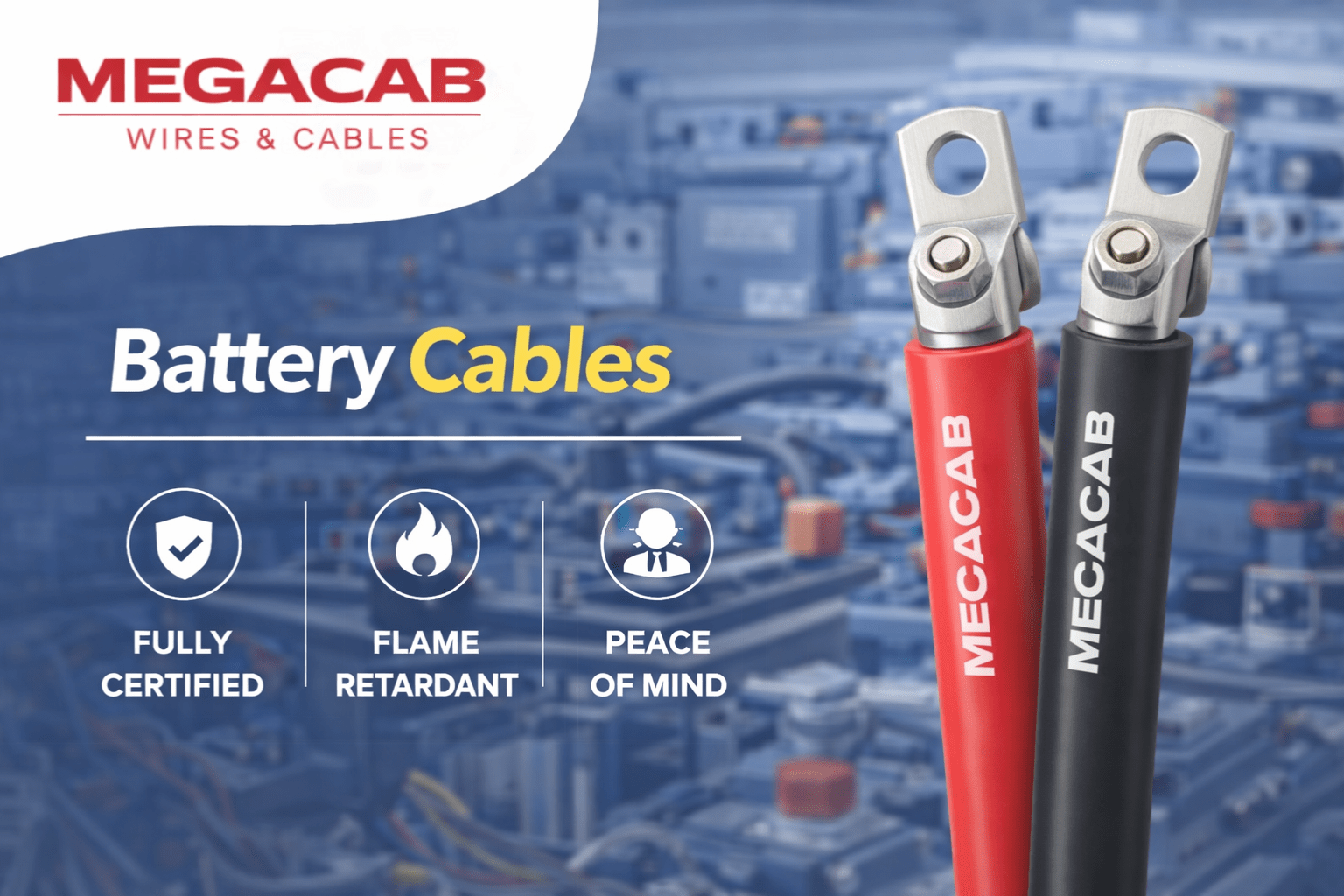
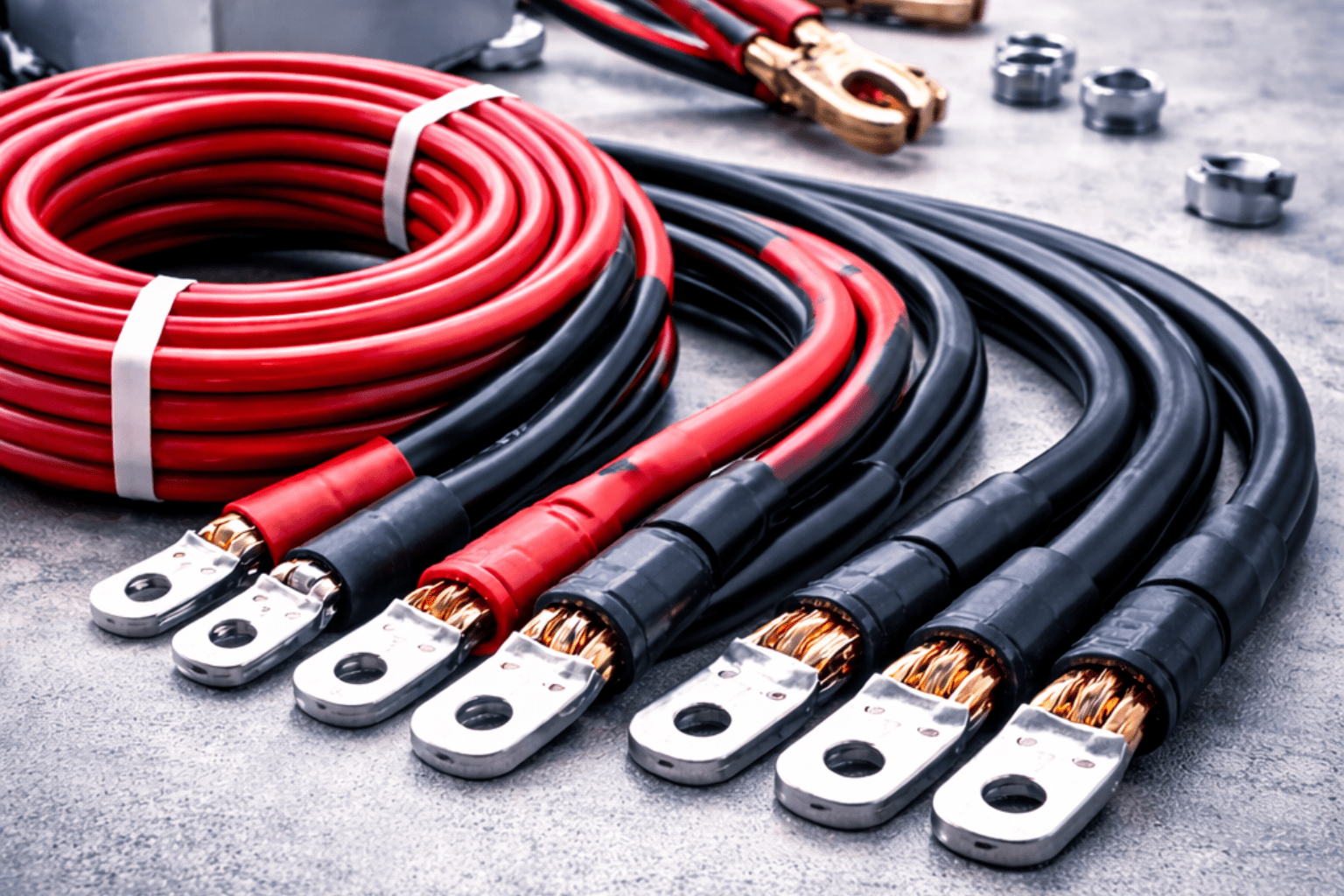
Battery cables are specially designed flexible power cables used for efficient transmission of electrical energy between batteries and electrical systems. Manufactured using high-quality finely stranded copper conductors and durable insulation materials, these cables ensure excellent conductivity, flexibility, and long-lasting performance in demanding applications.
Indian battery cable manufacturers offer reliable solutions engineered to withstand harsh operating conditions, including high temperatures, vibrations, moisture, and mechanical stress. The flexible construction allows easy installation in automotive, industrial, and power backup systems where consistent and safe power delivery is essential.
Battery cables are widely used in automotive vehicles, inverters, solar power systems, UPS systems, industrial machinery, and energy storage applications. Their robust insulation provides protection against abrasion, chemicals, oil, and environmental factors, ensuring enhanced safety and extended service life.
Key Features
High conductivity flexible copper conductor
Heavy-duty insulation for durability and safety
Excellent resistance to heat, oil, and chemicals
High flexibility for easy installation
Reliable performance under heavy load conditions
Suitable for automotive and industrial power applications
Applications
Automotive battery connections
Inverter and UPS systems
Solar power systems
Industrial equipment and machinery
Power backup and energy storage systems
Technical Specifications
Conductor:
Flexible bare copper Class 5 conductors as per IEC 60228 standards, ensuring excellent conductivity and flexibility.
Extra Flexible Battery Cables:
Flexible bare copper Class 6 conductors as per IEC 60228, designed for enhanced flexibility and improved performance in dynamic applications.
Insulation:
HR PVC (Heat Resistant PVC) insulation providing durability, thermal stability, and electrical safety.
Flexible Battery Cables Insulation:
HOFR (TPR Rubber) insulation for superior flexibility and flame-retardant properties.
Separator:
Polyester tape applied over the conductor for HOFR insulated extra flexible battery cables to provide additional mechanical protection and stability.
Operating Temperature Range:
-20°C to +105°C
MEGACAB PVC Insulated Battery Cables (As per IS 2465 : 1984)
| Cable Size (Sq.mm) | Number / Dia. of Strands (Nom.) mm | Resistance at 20°C (Max.) Ohms/km | Nominal Insulation Thickness (mm) | Overall Diameter (Approx.) mm |
|---|---|---|---|---|
| 10 | 140/0.30 | 1.91 | 1.0 | 6.5 |
| 16 | 126/0.40 | 1.21 | 1.0 | 8 |
| 25 | 196/0.40 | 0.78 | 1.2 | 10.5 |
| 35 | 276/0.40 | 0.554 | 1.3 | 12 |
| 50 | 396/0.40 | 0.386 | 1.4 | 15 |
| 70 | 360/0.50 | 0.272 | 1.4 | 17.5 |
| 95 | 480/0.50 | 0.206 | 1.6 | 19 |
| 120 | 608/0.50 | 0.161 | 1.6 | 22 |
| 150 | 750/0.50 | 0.129 | 1.8 | 25 |
| 185 | 931/0.50 | 0.106 | 2.0 | 28 |
Frequently Asked Questions (FAQs)
Battery cables generally use finely stranded flexible bare copper conductors (Class 5 or Class 6 as per IEC 60228) to provide high conductivity, flexibility, and durability.
Class 5 conductors offer good flexibility for standard applications, while Class 6 conductors provide extra flexibility, making them suitable for applications requiring frequent movement or bending.
High-quality battery cables are designed to operate within a temperature range of approximately -20°C to 105°C, ensuring reliable performance under varying conditions.
Yes, battery cables with durable insulation such as HR PVC or HOFR rubber are suitable for both indoor and outdoor installations due to their resistance to moisture and environmental stress.
Cable size selection depends on current load, voltage requirements, installation length, and environmental conditions. Choosing the correct size helps prevent voltage drop and overheating.