Solar Cables Manufacturers in India
Table of Contents
Introduction
Established in 2013 and headquartered in Rajkot, Gujarat (India), Megacab is a trusted name in the manufacturing, trading, and exporting of high-quality wires and cables. Built on a strong foundation of engineering excellence, innovation, and customer-first values, we deliver reliable electrical solutions that power homes, industries, and infrastructure across India and global markets.
Solar energy is becoming one of the most popular sources of renewable energy in India. With increasing electricity costs and growing awareness about environmental protection, many industries, businesses, and homeowners are installing power systems. Solar panels help generate clean electricity from sunlight, but a reliable cable system is equally important for transferring this electricity safely and efficiently. This is why choosing experienced Cables Manufacturers in India is important for every power project.
Solar cables are specially designed to connect panels, inverters, batteries, and other electrical equipment. They are manufactured to handle outdoor conditions, high temperatures, sunlight exposure, and changing weather. Good-quality cables help maintain electrical performance and reduce the risk of power loss and cable damage.
Megacab is a name to consider in the cable industry, offering cable solutions for different electrical and industrial requirements. With a focus on quality, reliability, and customer satisfaction, Megacab aims to support customers looking for dependable cable products for their applications.
What Are Solar Cables
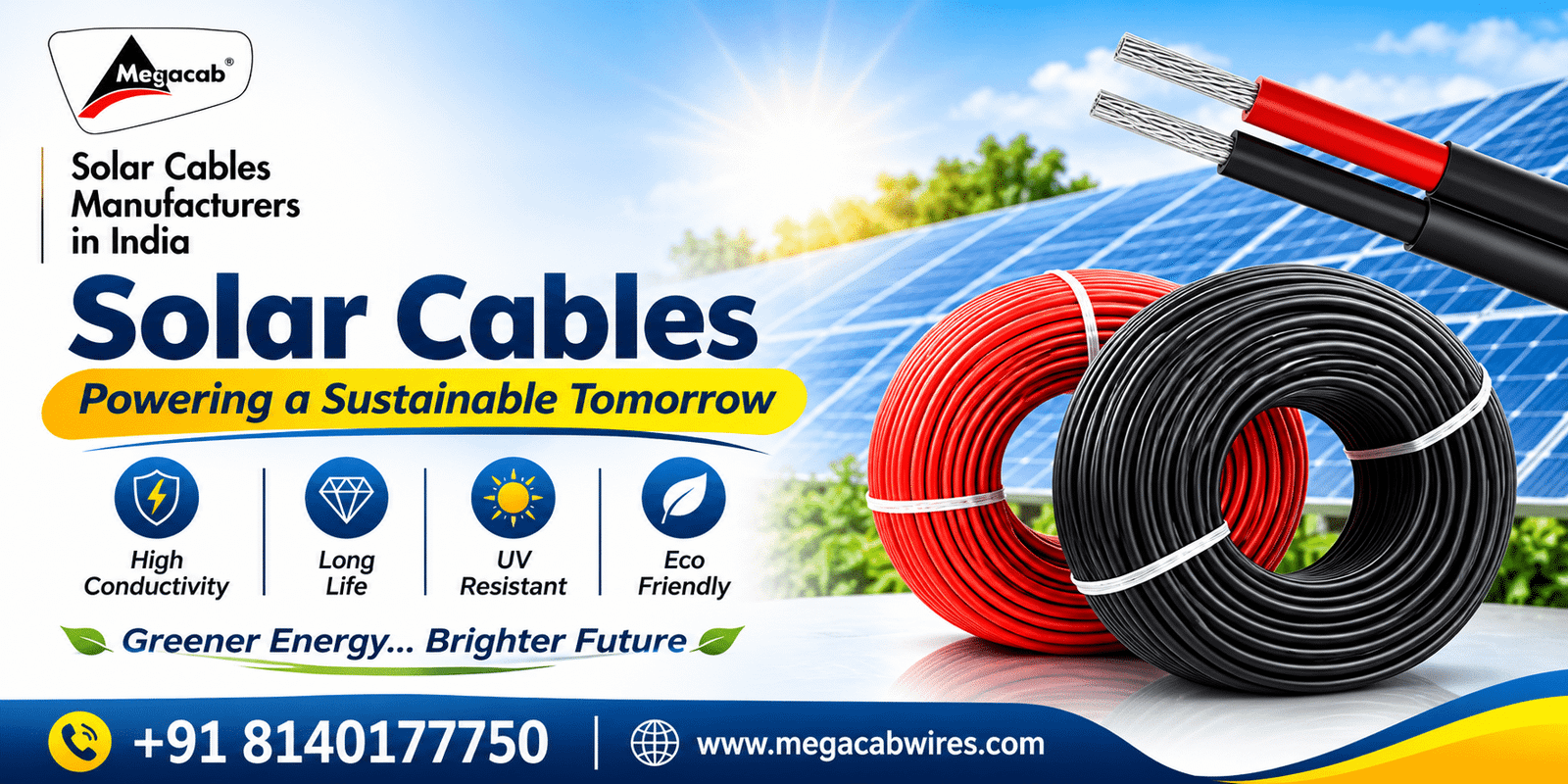
Solar cables are specially designed electrical cables used in photovoltaic (PV) systems. Their main purpose is to transfer the electricity generated by panels to inverters, batteries, and other connected equipment.
Unlike ordinary electrical wires, solar cables are designed for outdoor installation and long-term exposure to environmental conditions. They need to withstand ultraviolet (UV) radiation, moisture, heat, and temperature changes.
Solar cables are commonly used in residential rooftop systems, commercial installations, industrial plants, and large power projects.
Importance of Choosing the Right Solar Cable Manufacturers in India
Selecting the right solar cable manufacturer is important because cable quality directly affects the safety and performance of a power system.
1. Better Electrical Performance
High-quality cables help transfer electricity efficiently from panels to connected equipment. Proper conductor size and cable construction help reduce unwanted power losses.
2. Protection Against Weather Conditions
Solar cables are generally installed outdoors. They must handle sunlight, rain, heat, humidity, and temperature changes. Suitable insulation and protective materials help improve their durability.
3. Improved Electrical Safety
Properly manufactured cables help reduce the risk of insulation damage, short circuits, and electrical leakage when correctly selected and installed.
4. Long-Term Durability
Solar power systems are designed to operate for many years. Durable cables help reduce frequent replacement and maintenance requirements.
5. Reliable Solar Installation
Using suitable cables helps create dependable electrical connections between panels, inverters, and other system components.
Types of Solar Cables
1. DC Solar Cables
DC solar cables are commonly used to connect panels with other components of a power system. They carry direct current generated by panels to the inverter. These cables are designed to withstand sunlight, outdoor weather conditions, and temperature variations.
- Designed for DC power transmission.
- UV-resistant outer insulation.
- Suitable for outdoor solar installations.
- Provides reliable electrical performance.
- Available in different sizes and specifications.
2. AC Solar Cables
AC solar cables are used to transfer alternating current from the inverter to the distribution panel or electrical grid. They play an important role in connecting power systems with electrical appliances and commercial power networks.
- Suitable for AC power transmission.
- Available in different voltage ratings.
- Provides reliable electrical connectivity.
- Designed for residential and industrial applications.
- Supports efficient power distribution.
3. Single Core Solar Cables
Single core cables contain one electrical conductor covered with insulation. They are widely used in panel installations where individual positive and negative connections are required.
- Simple and flexible cable construction.
- Easy to install and maintain.
- Suitable for solar DC connections.
- Available in different conductor sizes.
- Designed for dependable electrical performance.
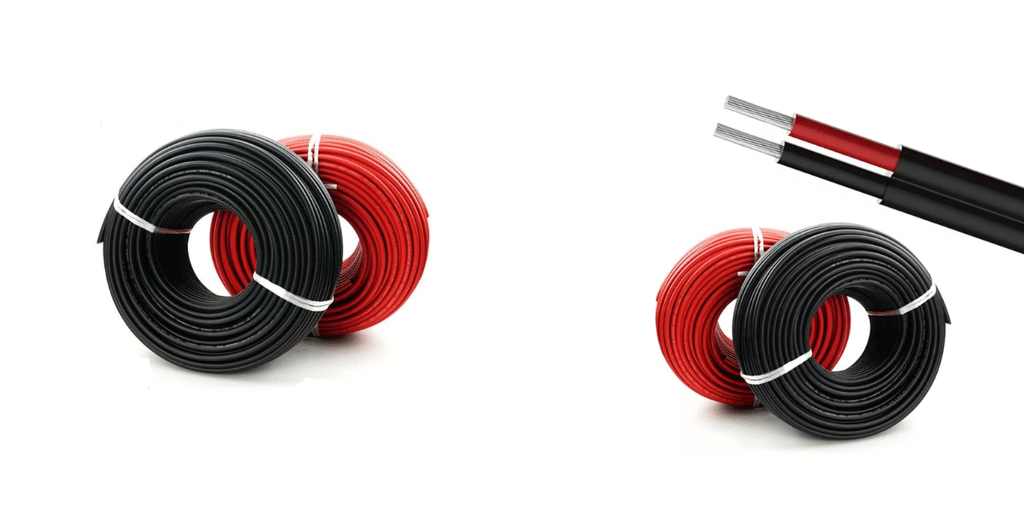
4. Twin Core Solar Cables
Twin core cables contain two insulated conductors within a single cable structure. They are useful for applications where two electrical connections need to be routed together.
- Contains two insulated conductors.
- Helps simplify cable routing.
- Suitable for selected solar power connections.
- Offers convenient installation.
- Available in different specifications.
5. Tinned Copper Solar Cables
Tinned copper cables use copper conductors coated with a thin layer of tin. This coating helps improve resistance to corrosion, making these cables suitable for demanding installations.
- Good electrical conductivity.
- Improved corrosion resistance.
- Suitable for outdoor applications.
- Provides dependable electrical connections.
- Supports long-term cable performance.
Applications of Solar Cables in Different Industries
1. Residential Solar Power Systems
Solar cables are widely used in residential rooftop installations. They connect panels to inverters and help transfer the generated electricity for household use. High-quality cables support safe power transmission and help homeowners get reliable performance from their systems.
2. Commercial Solar Power Projects
Commercial buildings such as offices, shopping malls, hospitals, and hotels use cables in their rooftop solar power systems. These cables connect multiple panels and electrical components to ensure smooth electricity transmission and support the energy requirements of commercial facilities.
3. Industrial Solar Power Plants
Industries install large solar power systems to reduce electricity expenses and support energy efficiency. Solar cables are used to connect modules, combiner boxes, inverters, and distribution systems. They are suitable for industrial applications where reliable electrical connections are important.
4. Solar Farms and Large-Scale Projects
Solar cables are essential in large solar farms where thousands of panels generate electricity. They help transfer DC power from modules to central inverter systems. Durable solar cables support continuous operation and reliable power transmission in outdoor environments.
5. Solar Street Lighting Systems
Solar street lights use panels to charge batteries during the daytime. Solar cables connect the panels, charge controllers, batteries, and LED lights. They help maintain proper electrical connections and support efficient operation of street lighting systems.
6. Solar Water Pumping Systems
Solar-powered water pumps are commonly used in agricultural fields, farms, and remote locations. Solar cables connect panels with pump controllers and motors. They help transfer the electricity required to operate water pumps for irrigation and water supply.
7. Off-Grid Solar Systems
Off-grid solar systems operate independently of the electricity grid. They use panels, batteries, charge controllers, and inverters to provide electricity. Solar cables connect these components and support reliable power transmission in homes, farms, and remote facilities.
8. Solar Battery Storage Systems
Solar cables are used to connect power equipment with battery storage systems through compatible charge controllers and power conversion equipment. They help transfer electricity for battery charging and support energy storage for later use.
9. Solar Power Systems in Remote Areas
Remote villages, communication towers, rural facilities, and isolated locations often depend on energy. Solar cables provide electrical connections between panels and supporting equipment, helping deliver electricity where conventional power supply is limited.
10. Solar Rooftop Installations
Residential, commercial, and industrial rooftops use solar cables to connect photovoltaic modules with other system components. Their weather-resistant insulation and suitable electrical ratings make them important for outdoor solar installations.
11. Solar Telecom Applications
Telecommunication towers use power systems to maintain electricity supply for communication equipment, especially in locations with unreliable grid connections. Solar cables connect panels, controllers, batteries, and other electrical components.
12. Hybrid Solar Power Systems
Hybrid solar systems combine energy with grid electricity, batteries, or backup generators. Solar cables help connect different components and support the movement of electrical power between the generation and conversion equipment.
How to Choose the Solar Cable Manufacturers in India
Finding the right manufacturer requires attention to several important factors. Buyers should not select solar cables only by comparing prices.
- Product Quality: Check the quality of the conductor, insulation, and outer sheath.
- Technical Specifications: Confirm the voltage rating, conductor size, temperature rating, and current requirements.
- Relevant Standards: Check compliance with applicable IS, IEC, or other project-specific standards.
- UV and Weather Resistance: Ensure that cables are suitable for the expected outdoor installation conditions.
- Manufacturing Experience: Consider manufacturers with relevant experience in cable production.
- Product Range: Select a manufacturer that can meet different project requirements.
- Customer Support: Good technical assistance helps buyers select suitable products.
Always check product documentation and certifications before purchasing cables for important solar installations.
Benefits of Using High-Quality Solar Cables
1. High Electrical Efficiency
One of the biggest benefits of choosing quality cables is better electrical performance. Good-quality conductors help reduce power loss during electricity transmission. This allows solar energy to travel efficiently from panels to the connected electrical system.
2. Excellent Weather Resistance
Solar cables are generally installed outdoors, where they face sunlight, rain, dust, humidity, and temperature changes. Reliable manufacturers provide cables with suitable insulation and protective materials to withstand these environmental conditions and support long-term performance.
3. UV and Heat Resistance
Solar cables are continuously exposed to direct sunlight and high temperatures. UV-resistant insulation helps protect cables from sunlight-related deterioration. Heat-resistant materials also help cables perform safely under the operating temperatures specified for their application.
4. Enhanced Electrical Safety
Safety is a major consideration in every solar installation. Properly manufactured cables provide reliable insulation and protection against electrical leakage and short circuits when correctly selected and installed. They help improve the overall safety of power systems.
5. Long Service Life
High-quality solar cables are designed for long-term outdoor applications. Their durable insulation, strong construction, and resistance to environmental stress help reduce premature damage and replacement requirements. This makes them a valuable choice for long-term energy projects.
6. Low Maintenance Requirements
Quality solar cables require less frequent maintenance when correctly installed and protected. Their durable construction helps reduce common problems caused by environmental exposure, insulation damage, and cable deterioration. This can help lower maintenance costs over time.
7. Better Flexibility and Easy Installation
Solar cables are designed with flexible conductors that make installation easier. They can be routed through cable trays, conduits, rooftops, and panel mounting structures. Their flexibility helps installers complete cable connections conveniently.
8. Fire Safety and Reliable Performance
Many quality solar cables are manufactured with flame-retardant and halogen-free materials. These properties can help reduce fire-related risks and limit harmful smoke and gases, depending on the cable specification.
9. Cost-Effective Solar Solutions
Investing in quality cables can help reduce long-term expenses. Durable cables require fewer replacements and can minimise maintenance-related costs. They also support the reliable operation of solar installations over an extended period.
Why Choose Megacab
1. High-Quality Raw Materials
Reliable solar cable manufacturers use quality raw materials to produce durable and dependable cables. High-quality copper or other suitable conductors help maintain proper electrical conductivity. Good insulation materials also protect cables from external damage and support long-term performance.
2. Excellent Weather Resistance
Solar cables are regularly exposed to sunlight, heat, rain, dust, and changing weather conditions. Reputed manufacturers produce cables with suitable UV-resistant and weather-resistant insulation and sheathing. This helps cables perform reliably in outdoor installations.
3. Better Electrical Performance
Quality solar cables are designed to carry electrical current efficiently. Proper conductor sizing and low electrical resistance help reduce power losses during transmission. This supports better overall performance of power systems.
4. Long Service Life
Solar power systems are long-term investments. Using durable solar cables helps reduce the need for frequent replacement and maintenance. Quality insulation, strong construction, and resistance to environmental conditions contribute to a longer service life.
5. Safety and Reliability
Safety is one of the most important factors in installations. Trusted manufacturers follow relevant quality and safety standards to produce dependable cables. Properly selected solar cables help reduce the risk of overheating, insulation failure, and electrical faults.
6. Wide Range of Solar Cable Options
Professional Solar Cable Manufacturers in India offer different cable sizes, conductor types, voltage ratings, and insulation options. This allows customers to select suitable cables according to their project requirements.
7. Cost-Effective Solutions
Choosing quality solar cables can provide better value over time. Although low-cost cables may appear attractive initially, poor-quality products can lead to maintenance expenses and performance issues. Reliable manufacturers offer solutions that balance quality, performance, and cost.
8. Customised Cable Solutions
Different solar projects have different electrical requirements. Experienced manufacturers may provide customised cable lengths, sizes, colours, and specifications according to project needs. This makes installation easier and helps customers find suitable products.
9. Technical Support and Guidance
A professional manufacturer can guide buyers in selecting appropriate cables based on current capacity, installation conditions, temperature, voltage rating, and cable length. This technical support helps customers make informed purchasing decisions.
10. Compliance with Industry Standards
Reputed manufacturers understand the importance of following applicable industry standards and testing requirements. Buyers should check product specifications, test reports, certifications, and compliance with relevant standards before purchasing solar cables.
Frequently Asked Questions (FAQs)
1. What are solar cables used for
Solar cables are used to connect panels, inverters, batteries, and other components in photovoltaic systems.
2. Which type of cable is used in solar panels
DC solar cables are commonly used to connect solar panels. They are designed for outdoor use and suitable for photovoltaic applications.
3. Why are solar cables different from normal electrical cables
Solar cables are designed to withstand outdoor conditions such as UV radiation, moisture, and temperature variations.
4. How do I choose the right solar cable size
Cable size depends on current, voltage, cable length, installation conditions, and permissible voltage drop. A qualified electrical professional should calculate the correct size.
5. Are solar cables suitable for outdoor installation
Yes. Solar cables designed and rated for outdoor photovoltaic applications are suitable for outdoor installation within their specified operating conditions.
6. What materials are used in solar cables
Solar cables commonly use copper conductors with specially designed insulation and protective outer sheaths.
7. Why should I choose reliable Solar Cables Manufacturers in India
Reliable manufacturers help buyers access suitable cable specifications, consistent product quality, and relevant technical documentation.
8. Why consider Megacab for cable solutions
Megacab is a company to consider for cable requirements, with a focus on product quality, customer needs, and dependable business relationships.
Conclusion
Solar cables are an essential part of every power system. They help transfer electricity safely from solar panels to inverters and other electrical equipment. Choosing the right cables improves system reliability, supports efficient power transmission, and helps protect solar installations from electrical problems.
Megacab aims to support customers with reliable cable solutions and a customer-focused approach. For businesses and buyers exploring cable products for different electrical applications, Megacab is a company worth considering.