Automotive Battery Cable Manufacturer
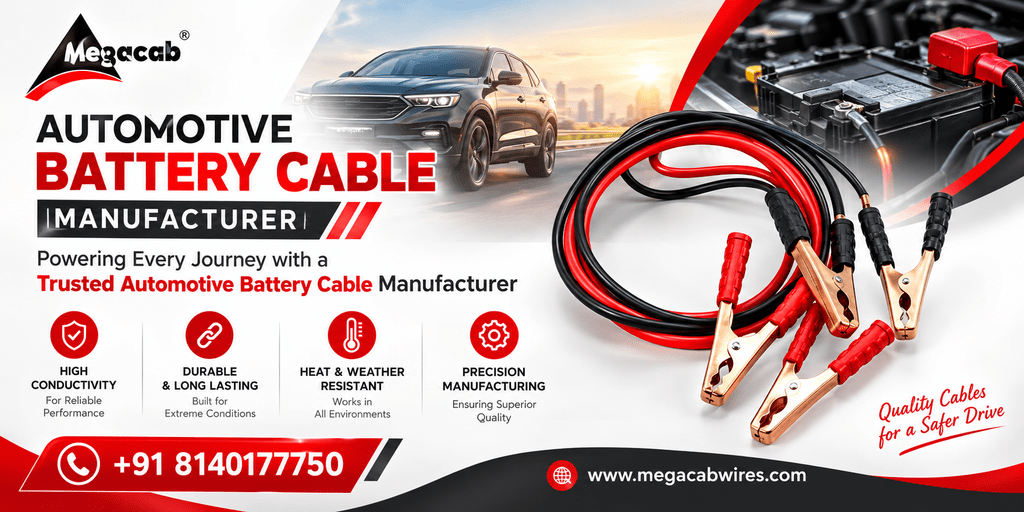
Table of Contents
Introduction
Established in 2013 and headquartered in Rajkot, Gujarat (India), Megacab is a trusted name in the manufacturing, trading, and exporting of high-quality wires and cables. Built on a strong foundation of engineering excellence, innovation, and customer-first values, we deliver reliable electrical solutions that power homes, industries, and infrastructure across India and global markets.
The automotive industry depends on reliable electrical systems for smooth vehicle performance. From starting the engine to powering electrical components, battery cables play an important role in transferring electrical power safely and efficiently. A high-quality battery cable helps maintain a stable connection between the battery, starter motor, alternator, and other electrical components.
Choosing the right Automotive Battery Cable Manufacturer is therefore important for vehicle manufacturers, auto component suppliers, distributors, and replacement-part businesses. A reliable manufacturer can provide cables with good conductivity, strong insulation, flexibility, durability, and resistance to demanding automotive conditions.
Megacab is a trusted name in the cable industry, offering quality cable solutions designed to meet the requirements of demanding automotive applications. With a focus on quality, performance, and dependable manufacturing, Megacab works to provide reliable cable solutions for various automotive and industrial requirements. We are the best Automotive Battery Cable Supplier.
What Is an Automotive Battery Cable
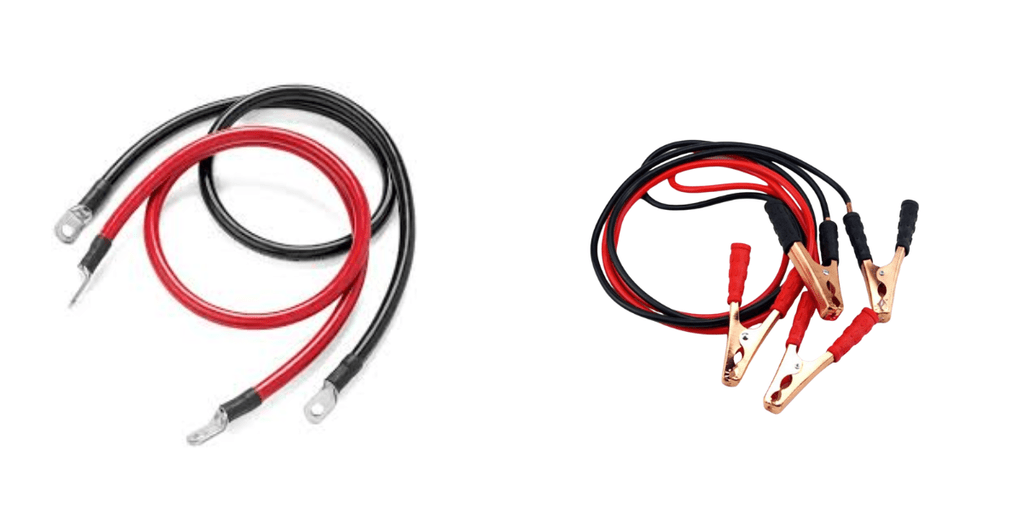
An automotive battery cable is a heavy-duty electrical cable used to carry electrical current between the vehicle battery and other major electrical components. It is generally designed to handle high current loads, especially during engine starting. We are the best Automotive Battery Cable Exporter.
- Excellent electrical conductivity
- Low electrical resistance
- Strong mechanical performance
- Flexible construction
- Durable insulation
- Resistance to heat and moisture
- Reliable performance under vibration
Battery cables need to handle high current loads during engine starting and regular vehicle operation. They must also withstand vibration, temperature changes, moisture, oil, chemicals, and continuous movement inside the vehicle.
Why Quality Battery Cables Are Important
A vehicle’s electrical system requires dependable connections. Poor-quality or incorrectly specified cables can increase electrical resistance and may result in voltage drops, overheating, difficult engine starting, or premature cable failure.
A reliable Automotive Battery Cable Manufacturer focuses on producing cables with suitable conductor materials, insulation, flexibility, and construction for the intended application.
1. Better Current Flow
- The main purpose of a battery cable is to transfer electrical current from the battery to the required components. High-quality cables use suitable conductive materials that allow current to flow efficiently. Good conductivity helps reduce electrical resistance and minimises energy loss. This is particularly important during engine starting because the starter motor requires a high amount of current.
2. Reliable Engine Starting
- A vehicle’s starter motor requires substantial electrical current from the battery. If the battery cable has high resistance, damaged insulation, loose connections, or poor-quality conductors, the starter may not receive enough power. Reliable battery cables provide a strong electrical connection between the battery and starter system, helping support consistent engine starting performance.
3. Improved Electrical Safety
- Safety is one of the biggest reasons to choose high-quality automotive cables. Poorly manufactured cables may overheat when carrying high current. Excessive heat can damage the cable insulation and surrounding components and may create electrical hazards.
4. Better Resistance to Heat
- Automotive cables are often exposed to high temperatures, especially when they are installed close to engines and other heat-generating components. Quality battery cables are designed with insulation materials that can withstand the expected temperature range.
5. Resistance to Vibration and Movement
- Vehicles continuously experience vibration and movement while driving. Battery cables must therefore be flexible and mechanically strong enough to withstand these conditions. A properly manufactured cable can handle regular vibration without easily breaking or developing internal conductor damage.
Features of Automotive Battery Cables
1. Excellent Electrical Conductivity
- One of the most important features of automotive battery cables is good electrical conductivity. The cable must efficiently transfer electrical current from the battery to the starter and other components. High-quality conductive materials help reduce electrical resistance and power loss. This allows the electrical system to operate more efficiently and supports reliable vehicle starting.
2. High Flexibility
- Automotive cables are often installed in areas where space is limited. They may need to bend around the engine compartment and other vehicle components. Flexible battery cables are easier to install and route. They can handle repeated movement and vibration without easily breaking or becoming damaged.
3. Heat Resistance
- The engine compartment can reach high temperatures during vehicle operation. Therefore, automotive battery cables need insulation that can withstand elevated temperatures. Heat-resistant insulation helps protect the conductor and maintain cable performance. It also reduces the chances of insulation deterioration when the cable is exposed to heat for long periods.
4. Resistance to Oil and Chemicals
- Automotive cables may come into contact with oil, grease, fuel, cleaning chemicals, and other substances. Poor-quality insulation can deteriorate when exposed to these conditions. Good-quality automotive battery cables are designed with suitable insulation materials that provide resistance against common automotive oils and chemicals.
5. Strong Mechanical Strength
- Vehicles experience continuous vibration, movement, and mechanical stress. Battery cables therefore need good mechanical strength. Durable cables can withstand normal vibration and movement within the engine compartment. Strong insulation also helps protect the cable from abrasion and physical damage.
6. Long Service Life
- Durability is another important feature of automotive battery cables. A good cable should provide consistent performance over an extended period when properly installed and used within its intended conditions. Using high-quality materials and maintaining consistent manufacturing standards can help improve the service life of automotive cables.
Applications of Automotive Battery Cables
1. Battery to Starter Motor
- One of the most important applications of automotive battery cables is connecting the vehicle battery to the starter motor. When the ignition is activated, the starter motor requires a high current to crank the engine. A properly designed battery cable helps transfer this current efficiently while minimising voltage loss. High-quality cables with flexible conductors are particularly useful because they can accommodate engine movement and vibration without compromising electrical performance.
2. Battery to Alternator
- Battery cables are also used between the battery and alternator. The alternator generates electrical power while the engine is running and helps recharge the battery. The cable must therefore provide dependable current transmission under continuous operating conditions. A suitable cable construction can help maintain stable electrical performance while resisting the heat, vibration, and automotive fluids commonly found inside an engine compartment.
3. Battery Grounding and Earthing
- Automotive battery cables are widely used for grounding the battery and connecting electrical components to the vehicle chassis. Proper grounding is essential for completing electrical circuits and supporting reliable operation of vehicle electronics. Earth cables and grounding straps are commonly designed with flexibility and mechanical durability so they can withstand vibration and repeated movement.
4. Fuse Box and Power Distribution
- Battery cables can connect the battery to the main fuse box or power distribution system. From there, electrical power can be supplied to different vehicle systems. These applications require cables capable of carrying the required current while maintaining dependable insulation and mechanical protection. Automotive battery cable manufacturers can supply different conductor cross-sections according to the vehicle’s electrical requirements.
5. Passenger Cars
- Passenger cars contain numerous electrical systems, making dependable battery and power cables essential. Battery cables may be used for starter circuits, charging circuits, grounding, fuse boxes, lighting, electronic systems, and other vehicle electrical functions. Modern automotive cables are often designed to be flexible enough for installation through compact engine compartments and wiring routes.
6. Commercial Vehicles
- Trucks, buses, vans, and other commercial vehicles frequently require robust electrical systems. Automotive battery cables are used for battery connections, starting systems, charging systems, grounding, and electrical distribution. Because commercial vehicles can operate for long hours and under demanding conditions, cables need suitable resistance to vibration, temperature variations, oil, grease, fuel, and mechanical stress.
7. Agricultural and Off-Road Vehicles
- Tractors, harvesters, loaders, excavators, and other off-road machinery operate in challenging environments. Battery cables used in these machines may encounter dust, mud, moisture, vibration, temperature changes, and mechanical movement. Manufacturers can provide customised battery cables with appropriate insulation and conductor construction to suit these demanding applications.
8. Electric and Hybrid Vehicles
- The growth of electric and hybrid vehicles has created additional requirements for specialised automotive power and battery cables. Depending on the application, these can include low-voltage battery wiring as well as high-voltage cables used between batteries, inverters, converters, and other powertrain components. High-voltage automotive cables require suitable insulation, shielding where required, temperature performance, and mechanical protection.
9. Automotive Wiring Harnesses
- Battery and power cables can also form part of larger automotive wiring harnesses. Harness systems route electrical power and signals throughout a vehicle while protecting cables from abrasion, heat, vibration, and other environmental conditions. Flexible cables are especially useful where wiring must pass through tight spaces or follow complex routing paths.
10. Lighting and Electrical Accessories
- Automotive battery cables and related automotive cables support electrical loads such as headlights, tail lights, wipers, air-conditioning systems, infotainment equipment, sensors, and other accessories. The cable size and construction should be selected according to the current requirement, installation environment, operating temperature, and vehicle design.
11. Heavy-Duty Automotive Equipment
- Heavy-duty vehicles and equipment often require larger battery cables because their starter motors and electrical systems can demand high current. Suitable cables can be manufactured with flexible copper conductors and protective insulation for reliable power transfer. Some manufacturers offer battery cable sizes extending from relatively small cross-sections to very large sizes for demanding applications.
Why Choose Megacab
1. High-Quality Conductive Materials
- The performance of an automotive battery cable depends greatly on the quality of its conductor. Professional manufacturers use suitable conductive materials such as high-grade copper or other application-specific materials to achieve efficient electrical conductivity. Good-quality conductors help reduce electrical resistance and minimise energy loss during current transmission. This is especially important for starter circuits, where high current is required for a short period.
2. Excellent Current Carrying Capacity
- Automotive battery cables must handle high electrical current, especially during engine starting. An undersized or poorly manufactured cable can result in voltage drops, overheating, and unreliable starting performance. A reliable manufacturer designs battery cables with suitable conductor size, strand construction, and insulation based on the required current capacity. This helps the cable perform efficiently under demanding automotive conditions.
3. Strong and Durable Construction
- Automotive cables operate in challenging environments. They may be exposed to engine heat, vibration, moisture, oil, chemicals, dust, and repeated movement. A professional Automotive Battery Cable Manufacturer focuses on producing cables with strong construction that can withstand these conditions. Proper insulation, conductor flexibility, protective layers, terminals, and connection methods contribute to the overall durability of the cable.
4. Reliable Insulation
- Insulation is another important part of an automotive battery cable. It protects the conductor from external damage and helps prevent accidental electrical contact. Depending on the application, manufacturers may use suitable insulation materials designed to provide resistance against heat, abrasion, moisture, oils, and other environmental factors.
5. Customized Battery Cable Solutions
- Different vehicles have different electrical layouts and space requirements. Standard cables may not always be suitable for every application. A professional Automotive Battery Cable Manufacturer can provide customised cable solutions based on customer requirements. This flexibility makes it easier for OEMs and automotive component suppliers to integrate battery cables into different vehicle designs.
6. Accurate Terminal Assembly
- Battery cable terminals create the connection between the cable and the battery or electrical component. Poorly assembled terminals can cause loose connections, increased resistance, heat generation, and electrical failures. Experienced manufacturers use suitable crimping and assembly processes to create secure connections. Proper terminal selection and accurate assembly are particularly important for high-current automotive applications.
8. Consistent Manufacturing Quality
- For automobile manufacturers and component suppliers, consistency is extremely important. Every cable supplied for a particular application should maintain the required dimensions, electrical characteristics, and assembly quality. An established Automotive Battery Cable Manufacturer follows controlled manufacturing processes to maintain consistency from one production batch to another.
9. Cost-Effective Bulk Supply
- Automotive manufacturers, distributors, and aftermarket suppliers often require battery cables in large quantities. Working directly with a manufacturer can offer advantages for bulk purchasing. Manufacturers can optimize production according to order volume and provide competitive pricing for larger requirements. Direct sourcing can also simplify communication and help buyers manage their supply requirements more efficiently.
11. Improved Electrical Efficiency
- Efficient electrical transmission is essential for vehicle performance. High-quality battery cables are designed to provide a reliable path for electrical current between the battery and connected components. Proper conductor selection, cable sizing, and connection quality help reduce unnecessary resistance and voltage loss. This can support reliable starting performance and stable operation of the vehicle’s electrical system.
Conclusion
Automotive battery cables may be a small part of a vehicle, but they perform an important role in the electrical system. They are responsible for carrying high electrical currents between the battery and major electrical components. For this reason, cable quality, conductor size, insulation, flexibility, durability, and application suitability should be carefully considered. We are the best Automotive Battery Cable Exporter in Rajkot.
Megacab provides automotive cable products made with performance and quality in mind for companies searching for dependable cable solutions. Selecting the appropriate cable from a reputable automotive battery cable manufacturer can support dependable long-term operation, simpler installation, and effective electrical performance.